Introduction to Kate Funk Counseling

I battled disordered eating throughout my childhood and adolescence. In high
school things took a turn for the worse when I decided that if I lost weight I would be
more confident in myself. That desire to find confidence became a battle with an eating
disorder that completely took over my life and my identity. No matter how much weight I lost I became more and more obsessed with food and body. The eating disorder lied to
me and told me that just a few more pounds would be the answer. In treatment I was
told I would never recover, that an eating disorder was a lifelong battle. At the time I was
somewhat resigned to this idea. I planned to go out, buy some comfy pjs, and spend my
life in the revolving door of treatment, with no hope of completely ridding myself of the
eating disorder. As time went on, I realized I wanted more from life; I decided to fight for
my own recovery. I also found a calling. I chose to dedicate my life to helping others recover from eating disorders.

Today I am fully recovered. I no longer abuse my body. I am able to eat what I want, when I want it, without obsession or guilt. I have healthy relationships in which I am truly valued, without having to my mask my authentic self. I am living a life I never thought was possible. In fact, a life I had been told wasn’t possible. As a result, I am incredibly passionate about helping others create the life they never imagined was possible.

I enjoy working with individuals and families, helping them find space to heal and
move forward. Over the last seven years I have worked in outpatient, intensive
outpatient, partial hospitalization, and residential levels of care, all specializing in eating
disorders. In addition, I have experience working with addiction, depression, anxiety,
self-esteem, trauma, and body image. I am new to The Woodlands, TX, but not new to the world of mental health. I would love to meet with you and explore how we can work together towards your goals.

Please contact me at the phone number or email provided below!

518.302.1879

kate@katefunkmft.com

Here are some pictures that wouldn’t be possible had I not Recovered!
This slideshow requires JavaScript.

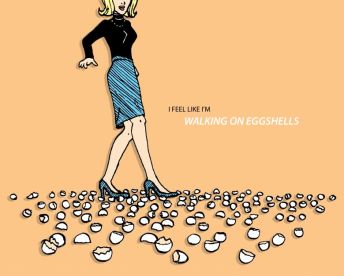
Walking on egg shells- talking to someone with an eating disorder

Damned if you do. Damned if you don’t. That is often what it can feel like when talking to a loved one with an eating disorder. If you bring something up, will they feel attacked, will they scream at you, will it get worse? It is always seductive to think, Maybe it’s just this once. Maybe it will go away if we just show him/her we believe they can do it.

I am recovered from an eating disorder, and in my own treatment program parents were almost encouraged to “walk on egg shells.” I remember my parents sitting in a family group where my fellow cohort and I were creating a list of don’ts: don’t talk about food, weight, appearance, exercise, don’t ask how her day was, don’t talk to her when she’s eating, don’t ask about food, don’t ask about the future, don’t ask about school, etc. It almost felt like no topics were safe to bring up without triggering someone. The list of don’ts could easily go on and on… and on, depending on whom you ask.

There is an illusion of safety behind the don’ts, but is it realistic? Coming home from treatment can feel incredibly vulnerable and overwhelming. Measures should certainly be made to ensure a successful transition, but hiding from every possible trigger for the rest of your life isn’t realistic. So how do we find a middle ground?

When I started working at Monte Nido Philadelphia, our clinical director, Emily, said in one of our first family groups together, “stomp on the egg shells” and she created a stomping motion with her feet. In that moment I had a flashback to a similar moment in my own treatment where the eggshells were alive and well and felt like the only thing protecting me from sudden doom. As my supervisor and someone I admire in the field, I had to give this some more thought. Should the eggshells be squashed?

In therapy we have to crack some eggshells and break down some walls in order to grow and heal. In order to strengthen our skills we need to be challenged, and, in order to master our skills, we need practice! I suggest having a conversation with your family member who has an eating disorder about their triggers. Everyone has a few things that are incredibly challenging for them personally. You and your loved one can request one or two thing(s) that are not up for discussion, but every other topic is fair game. Each client I’ve met has something (if not more than one thing) that is just incredibly triggering to them, whether that is their weight, dieting, or comments about appearance. Most clients know that one thing that always sets them back. Having my clients explore those triggers in therapy, and then share them with their supports, can be incredibly helpful.

Ask your loved one about their triggers; they can rank them from most challenging to least, and then agree which ones are off limits. Asking about how your family member would like triggers and challenging situations to be dealt with would also be helpful. Mistakes are going to happen. Those topics will accidentally be brought up, but set the expectation that those one or two topics will be avoided as much as possible. Those topics can then be left to work on in therapy (with and without supports present) and should be communicated to your loved one’s treatment team. Taking the pressure off the client and the family will help both client and supports feel that they know what’s expected of them.

Being a support of someone with an eating disorder is incredibly difficult. Constantly second guessing yourself about what to say and what not to say is exhausting. If you don’t already have a family therapist who is well versed in eating disorders, I would highly recommend it. Having a professional with whom supports and parents can discuss their concerns and worries will be a great relief. When struggling with bringing up a difficult topic, I recommend clients and parents alike to bring their loved one in for a family session. That way, everyone can feel supported in the conversation.

Talking about triggers and understanding how they affect your loved one can help you be mindful and sensitive of their needs during recovery. Understanding that we are human and will make mistakes, and then giving yourself the time to learn from those mistakes and move forward is paramount.

78b049e59bafb4ac8334c4609c6d8b67


You’re not a unicorn. You can recover.

My entire eating disorder goal was to die from Anorexia. My teenaged self asked my parents to let me pursue a modeling career, where whittling away to nothing would be required, and I could be somewhat productive as I slowly killed myself. I had no plans of living long; I prayed God would let me die. There was nothing I wanted more than to slowly drift off into a fatal existence of eating disorder oblivion. At that time there was no way I would have believed my life could be renewed; that I could have a life that wasn’t filled with calories, scales, and self- hatred. There was absolutely zero percent chance I would have believed I could recover and, at the time, zero percent of me wanted to.

This is where being a therapist is difficult for me at times. Clients come to see me everyday who absolutely believe the same thing. They are hopeless. They will never recover. They want to be left to their own devices. But if I believed the same thing and I made it, there is no reason that they can’t too! Clients never believe me, which is frustrating. Do they not believe I felt the same way? If I felt that way, and they feel that way, maybe there’s something to that?!?!

Eating disorders are tricky! They often want us to believe that our purpose and identity is our eating disorder and without that we are nothing. I like to think of the eating disorder as a parasite. It needs you to think that you can’t survive without it, because without that mentality, it simply can’t survive! The eating disorder works over time to convince you that, sure, others can recover, but you aren’t like everyone else! You are too far gone, too alone, too hopeless, too ugly, too useless to ever give up your eating disorder, the thing that takes the edge off all those painful thoughts. A colleague of mine, at Monte Nido, said, “You all think you’re unicorns, but really you’re just horses with carrots on your heads.” You’re not special because you have an eating disorder! A mom in a family group years ago once said to her daughter, “You know, your eating disorder is not the most interesting thing about you!” This has stuck with me. So many of my clients believe their eating disorders are their most valuable attribute, when in fact the eating disorder is the thing that is truly dulling their spirit, their talents, and their unique, authentic self!

If you think about what you are truly being called to do by the universe, by a higher power, by your family and friends, there is so much more to you than your eating disorder! Your eating disorder has hijacked your life; it’s not who you are! In my eating disorder I thought I was stupid, ugly, a loner and worthless. In recovery I have found my true self. I am creative, fun loving, a people person, intuitive, a problem solver, and a healer. I had no idea that if I cleared away the cobwebs of the thing that was killing me, I could find life beyond my wildest dreams.

Your eating disorder does not make you special; your authentic self makes you special! You can recover, even if you’re convinced you cannot. Remember, the eating disorder has brain washed you to believe you are a lost cause and dependent on your eating disorder, but in reality you are not damned to this existence. You have simply been highjacked to believe these things! Each step you take towards your healthy self is one step closer to uncovering your authentic path and who you truly are!


cfb84b5341dcb76d66d5a23cd0c4af99.jpg

Recovery Tips for Fall

As summer fades into fall here on the east coast I can’t help but get excited for cozy knit sweaters, pumpkin flavored coffee, and enjoying the brightly colored changing leaves. For our clients, we know fall often means transition; transition back to school and extra- curricular activities and for parents’ hectic schedules of pickups and drop offs, not to mention less sun light each day which can bring its’ own struggles.  In this post I will explore some fall tips for anyone facing recovery.

School can stir up a lot of anxiety, schedules are jam packed, meals and snacks can feel like a burden, and perfectionism flourishes in academic settings. I like to ask clients how they can do things differently. If historically, you took only advanced level classes, how about taking less intense courses? If you always do several clubs and sports, I would ask you to think about what you can sit out of this year. It’s important to realize that by stepping out, you’re actually taking the more courageous road. You are choosing to prioritize your recovery. Recovery is a full time job and in order to manage recovery and school it’s important to look at your schedule realistically and see what you can put on the back burner for now.  Just because you step away from a sport or club doesn’t mean you can’t go back to it at another time. In my own experience, I decided to leave school for almost an entire year and work with my Dad while pursuing intensive outpatient treatment. That wasn’t an easy decision for me, but it allowed me to be gentle with myself. That break from school allowed me to start to get to know myself as someone in recovery and not just my eating disorder self. The last thing your eating disorder wants you to do is to be gentle with yourself and that’s exactly what you should do!

A new season is a great opportunity to create new habits and routines. Instead of focusing on past behaviors think about how you could create new habits that are promoting your recovery. This thought can bring up lots of ideas, but maybe look at where some of the harder moments you had in the past and see how you could replace those moments with structure and support. There are countless things you can do to prioritize your recovery in your daily routine; maybe hanging a quote in your car to remind you to stop for lunch, listening to a soothing playlist on your way to school, sitting with friends or teachers at school that have a healthy relationship with food, decorating your locker with art work you made in treatment, preparing to go snacks at the beginning of the week, etc. Recognize that you are in charge of your own actions and how you can you act as if recovery is your number one priority, even when it feels like the furthest thing from a priority. Getting into recovery oriented routines early in the season will make it easy to continue moving forward.

Living with an eating disorder is like living in a fog, unable to connect with the world around you. One thing I liked to think about in my own recovery, was what would “baby Kate do?” and this would especially apply to a change in seasons. Would baby Kate want to go pumpkin picking or drink apple cider? Would baby Kate want to spend time with friends and family? Of course she would! This was a great way for me to get in touch with my soul self and what was really important to me instead of what my eating disorder wanted to do. The fall season is a great time to challenge your recovery with new routines, new activities, and new flavors, but during change and challenges I think sticking to the basics is always key.

Prioritize your treatment, set a schedule and stick with it! Meal plan with your dietitian and supports. Keep your doctor appointments. Life will come up and threaten to shake things out of place, but committing to these basics can help you feel grounded. Stepping back from activities that do not enhance your recovery can only promote your wellness. Look at where you’ve struggled in the past, and see if you can put support in those places. Fall is a time of transition, but transition is an excellent opportunity to step up your recovery and see how you can rewrite old scripts and step into healthy change.

a8fb489e73f4ef8d90e0ae9a45389602.jpg


This post was originally written for the Monte Nido blog and can be found here

Treatment now? That is the question!

Ambivalence is a common part of eating disorder recovery. Getting better can often feel terrifying and overwhelming which makes people question if they even want to recover. There is often a thick layer of denial and fear that can also make people question if getting better is truly worth it or if it’s the best time to start on the journey to recovery.

Many clients worry they don’t have time for treatment. (Financial worries, social obligations, academic pursuits, and upcoming vacations are just a few of the reasons clients have questioned whether or not to delay treatment.) As a recovered therapist I can relate to this issue on a personal level. I remember attempting to postpone my own treatment so I could attend my high school’s Homecoming. The woman looked me in the eye and said, “You might not make it to Homecoming if we don’t get you into treatment”. I was shocked. No one had ever spoken to me about my eating disorder like that before, but deep down something in me knew she was right.

It will never be the “perfect” time for treatment. There will never be a time in your life when everything is neatly tied up with a cheery red bow, you just happen to have extra money tucked away to spend on your well being, everyone in your life is supportive and excited for your recovery, and your “to do” list is empty. That’s not reality. Quite often, I find clients expect a variation of these scenarios in order to be ready for treatment. Treatment will never be convenient and, in fact, probably shouldn’t be. If recovery came easily the destination wouldn’t mean as much.

If you are wondering if you should go to treatment even though there are a laundry list of obstacles in your way, take some time to reflect on what’s preventing you from committing to treatment today. Ask yourself, am I truly present in my life? Am I able to laugh with family and friends? Am I able to concentrate in conversations? Am I able to engage in activities I enjoy? Is my life in jeopardy without more support? (This is a trick question; the answer is absolutely! Eating disorders are deadly!) Is it worth living a half-hearted life when I have the chance to recreate a whole one? Consider carefully your answers to these questions. Remember your life will still be there after treatment, and you might actually be present to participate in it instead of just surviving it!

Recovery is a process that allows you to peel away the layers of pain, break the habits and obsession, and heal so you can reclaim your true self. Treatment is the leap of faith that things can be better and the white flag admitting that your eating disorder’s way of life is no longer working. Asking for help is the most vulnerable thing we must do as humans, but it is also the most courageous. Treatment offers the opportunity to dust off and reclaim your life. If you are considering treatment, now is the time. Everything can be put on hold, but your health cannot.

f1a712c120f88dd8a47f39cc5044e94d.jpg

This post was originally written for Monte Nido and can be found here

ASKING NOT ASSUMING

I was out of the country recently and my boyfriend, Trevor, texted me requesting that I call his uncle. This has never happened before, so I was caught off guard, but quickly got a follow up text saying “I think I handled it”. Since I was away, I easily got distracted and forgot about it. When I got home from my trip, Trevor told me his uncle was going to a dinner party at a friend’s house whose daughter recently came home from treatment for Anorexia. He wanted some advice on what topics of discussion may make her uncomfortable and if he should mention her appearance or food. When he told me he handled it, I of course had to know what he told him. I was pleasantly surprised by the answer! When his uncle asked if he should mention her appearance or the food, Trevor encouraged him not to mention her appearance, because it might remind her of what she once looked like, and to not talk about the food since she could take his comments poorly. I have never felt more pride in all my life! My super rational, financial analyst boyfriend listens to all my rambling about eating disorders! I felt tears welling up in my eyes! This sweet moment reminded me how so few people really understand how challenging eating disorders are and just how powerful a simple question can be!

Comments about food and appearance are standard and often mentioned by well-intentioned folks with varied interpretations and outcomes by sufferers. If you think about someone you know who is going through a rough time a completely acceptable and supportive comment is “you look great” or “have some dessert you deserve it”. However, someone with an eating disorder can interpret those innocent comments one hundred different ways, depending on the person. Not all interpretations are necessarily bad, which makes it even more challenging to decipher what is and isn’t helpful. It is such a personal experience for each person. For example, in my personal recovery journey I took any positive comments about my appearance to mean I had gained too much weight and everyone was trying to make me feel better. In contrast, some clients perceive positive comments about appearance to be motivating and encouraging in moving forward in recovery. If a support person assumed that saying “you look great” was helpful, it would affect each eating disordered individual completely differently.

I think admitting that we do not know can be one of the more helpful things for supports and even providers to do. Whenever I meet a new client it’s easy to think I have a sense of what they’ve been through, but of course I don’t. We are all different and we all have different experiences and backgrounds. Assuming that I know what each client’s experience has been with their eating disorder is a step towards distancing myself from their reality and their truth. Asking questions builds understanding and connection. Although Trevor’s uncle didn’t ask his friend’s daughter what would be most helpful, he reached out to us and asked for support. He didn’t assume he knew what would be helpful, and he didn’t pretend he understood, instead he reached out! Asking for support is an imperative skill we teach our clients and it’s important to remember that as supports and providers we need to do the same!

15253459_10154883398183846_8884548235495563934_n.jpg

Here’s my eating disorder informed boyfriend and me! 🙂

I originally wrote this piece for Monte Nido, which can be found here


Soul Self Vs. Healthy Self

I started working at Monte Nido in 2016. The philosophy was so easy for me to incorporate into my beliefs of recovery, life and what is truly important in life. The staff at Monte Nido believe that clients must strengthen their “healthy self” in order to heal their eating disorder selves. We often talk about our healthy selves in treatment and how we can empower client’s healthy selves but as a clinician who has been doing our “Body and Soul” groups for the last few years, I recently started making the distinction between healthy self and soul self and feel like discerning between the two is important.

In treatment we use a level system in our programs to help motivate clients to move through treatment and assign various assignments and privileges as clients move through treatment. I think recovery also has certain stages or levels that are benchmarks for lessons and growth and I believe soul self and healthy self fit into this idea.

Healthy self is one of the first concepts we teach people. Helping clients understand that they have two selves, their eating disorder and their healthy self, that part of them that wants recovery, or wants a life outside of their eating disorder, or knows that they are hurting themselves, but doesn’t want to recover. In the beginning stages of recovery, the healthy self is like a whisper and as recovery progresses that sense becomes stronger and stronger. The more you can live in your healthy self and have time away from the ED self the more and more you can live authentically to yourself and be truly present in your life. This is where soul self comes in to play.

Soul self is when your healthy self is in control and you are living to the best of your ability, putting yourself first, taking care of yourself, and doing things that nourish who you are at your core. The more you are living up to your authentic truth, the more your soul self can thrive. For me, my soul self comes alive when I hear clients thank me for the work we’ve done together, when my pets rest their head on my legs, when I feel completely present in the moment and all my sense are being stimulated. This can look differently for everyone, but soul self, isn’t possible when you are afraid you are going to purge all the time or you’re nervous about the family meal you have later.

The goal is to live inline with our soul selves, to allow ourselves to be authentic and vulnerable and honest with our experience in the world at each precise moment. Being intoned with ones soul self, is the ultimate way to honor our past, present and future and to show up for not only ourselves but for others.

Image result for soul self

Sitting with Emotion

A friend asked me the other day, “how do you sit with your feelings?”. It’s a great question. Therapists love to say, “I think you have to sit with that”. But what does it mean? Here are my 3 tips to “sitting with” emotion.

  1. Don’t numb out! We all have behaviors that numb us whether it’s as severe as an eating disorder or something seemingly harmless like nail biting, shopping, or cleaning. These behaviors can prevent us from truly processing what’s going on internally.
  2. Journal. Journaling always helps me truly process what’s going on in my head and get it out on the page. Identifying emotions never came easily to me, but journaling has been a way that I can filter through all the chaos in my head and identify what’s really going on.
  3. Lean into the emotion. When you feel yourself getting angry, sad, scared, jealous, frustrated, etc, let yourself! If you feel tears welling up, allow them to flow. If you’re experiencing fear, talk about it. If you’re angry, yell! So many times I see people hold back their emotions and that isn’t helping anyone! Let your emotions flow, it is the only way you can work through them!

Sitting with our feelings is incredibly difficult in the beginning, but it gets easier the more you practice. Remember feelings fade, they don’t last forever. Next time you are struggling and aren’t sure how to “sit with it” try these tips, they can help you get in touch with how you’re feelings and you will begin to gain confidence in yourself in processing them.

75c3b48290181d4a20bee371bb892019

The Journey

I am 30 years old. I have overcome plenty of challenges. I’ve raised 3 crazed dogs. A boyfriend I have been with for nearly 7 years. I’m in recovery from alcoholism and heroin addiction. I completed college and graduate school. I recently moved my life to Texas where I know no one. I have overcome traumatic experiences. And yet, I have NEVER done anything as challenging as recovering from an eating disorder (ED). Nothing compares.

Recovery is about doing the opposite of what your brain is screaming at you, every fucking day. Nonstop. It is waring with yourself and betraying your best friend (the eating disorder) every single decision you make every single day. It is relentless, painful, time consuming, and torturous.

But if it wasn’t hard as hell, it wouldn’t be worth it and you could go back to your eating disorder anytime you wanted. If it wasn’t hard as hell you wouldn’t chose to stay in recovery and eventually fully recover because it would be easy to step in and out of. The sheer pain and torture make it no longer an option. In recovery you begin to see the ED for what it really is, a liar. A life sucker. A murderer. The further you go in recovery the more you realize that you no longer need it or want it in your life. You can find the gift of desperation and truly see just how unmanageable and depressive your existence has become.

You begin to want and crave freedom. And that craving can help you get back in touch with your soul, who you really are at your core. I remember in treatment a counselor told me about her weekend and how she went out with friends to buy shoes. The idea that people would go out to shop for shoes with friends was so out of my realm of normal. I was enslaved to my mind, I didn’t have time to go out with friends and shop! I had to hate myself, religiously count calories, and plan what I was and wasn’t going to eat over and over and over again. This was a light bulb moment! I wanted to be able to do normal things like this. I wanted to be able to be care free enough to go out and buy shoes and interact with friends and not be stuck in my head all the time.

I finally realized. My eating disorder was holding me back from everything in life. That’s where the journey starts and you start taking small steps towards your own freedom. When you start to dream, create, and build a life worth living, this is the journey. It’s not just about eating several times a day and keeping it. It’s about freedom from obsession, the bondage of self, and freedom to explore who you really are! Through my own recovery I learned things I never would have learned otherwise, which is why, I am grateful for my ED it took me through the darkest parts of myself and ultimately helped me unearth my brightest light.

Today, I like who I am (despite my ADHD brain and verbose personality, things I hated growing up)! I can genuinely care for myself and help others along the way. Recovery is the journey that makes life worth it and I am proud to call myself a recovered individual, because people with eating disorders are among the smartest, most creative, most talented individuals and I am honored to be among them.


dbf46ddf375ccb5d3bbf383b28008aa7

Welcome to Kate Funk’s Recovery Tips, Tricks, and Inspiration

Hi, I’m Kate!

This is my place to share recovery tips, tricks, and inspiration to help people struggling, families, supports, and professionals. I was diagnosed with an eating disorder in high school, but disordered eating and dieting were a huge part of my life beginning in elementary school. I remember wanting to pull the fat off my body during dance class at about 7 years old, reading labels on food packaging and developing an eating disorder around 12 years old.

Life with an eating disorder is like living in shades of gray. Color is gone. Sounds are muted. Feelings are numbed. Self- criticism and self- loathing run high. It is as if you are a prisoner in your own mind. Life with an eating disorder isn’t a life, it’s survival. But being fully recovered is possible and I am here to prove that. There is hope that you can live a life you never imagined possible. I have done and I have helped others find that place as well!

Eating disorders have the highest mortality rate of all mental illnesses and so with that in mind, they NEED to be taken seriously and treated immediately! The longer you have an eating disorder the harder it is to detangle yourself from it’s deadly web.

Treatment is fantastic, but it’s hard to remember all the things you learn and bring those lessons home and apply them, this is where this blog comes in handy. So take a peak when you need a reminder of what you’re working on. Regardless if you’re struggling with an eating disorder or a support buckle up and practice some self- care because this is a long ride, but I promise it’s worth it!


159fe7d1a46d489401d9d3a054c1b1ba